Into the Blue

A shark's skin can draw blood if you touch it the wrong way.

A dolphin sleeps with only half its brain at a time, keeping one eye open, so it never fully loses consciousness.

Buy on Amazon
Fins and Flippers book cover
Fins and Flippers

Exploring the Wonders of Sharks and Dolphins

Sharks have been in the ocean for over 450 million years — before the first forests, before the dinosaurs, before most of the animals that have ever lived on this planet. Whatever reshaped the world during that time, they adapted and continued. Dolphins arrived much later and brought something the ocean had never had before: an animal that passes knowledge between generations the way humans do, not through instinct but through watching, through culture, through a pod that holds its history the way a family holds a story. Fins and Flippers is your field guide to both of them.

Did you know?

Shark and dolphin facts worth stopping for.

A shark produces tens of thousands of teeth in a lifetime.

Shark teeth cycle forward in continuous rows, the front ones always the sharpest, the rows behind them always ready. A single shark leaves thousands of teeth behind it over its life — which is why fossilized shark teeth turn up on beaches and riverbeds all over the world long after the rest of the animal has dissolved back into the earth.

Dolphins call each other by name.

Each dolphin develops a unique signature whistle in its first months of life and keeps it for decades. Other dolphins in the pod learn it, use it to get that individual's attention specifically, and mimic it back when calling across open water. It is the closest behavior to named address ever documented outside of humans.

A shark can smell one part blood in a billion parts water.

That precision is only the beginning. Sharks also detect pressure changes through a system of fluid-filled canals running the length of their bodies, and sense the electrical fields produced by the heartbeats and muscle contractions of living things — including prey buried completely under sand, invisible and motionless, producing no scent and no sound.

Ghost nets never stop fishing.

An estimated 640,000 tonnes of fishing gear is lost or abandoned in the ocean every year. Monofilament line takes up to 600 years to break down in seawater. A net lost today will still be catching and drowning animals centuries from now, long after everyone who set it is gone.

From inside the book

A writing prompt that earns it.

Always Moving — Most sharks must keep moving to breathe. Forward motion pushes water through the gills, and a shark that stops moving stops getting oxygen. You are a reef shark who has become temporarily tangled in a piece of debris near the seafloor and cannot move. Write about the two minutes it takes for a current shift to work the debris loose, and the moment you break free.

One of 16 writing prompts inside — each launched by a fact that makes you stop.

Four ways in

Every kind of kid finds a way in.

Fins and Flippers opens with field-guide facts on both animals — their senses, biology, behavior, and survival across hundreds of millions of years of ocean life. Then come original stories: Shelby the reef shark navigating the open ocean by electrical field and chemical gradient, and Dolly the bottlenose dolphin learning to read a world built entirely out of sound. Did You Know boxes woven into each story at the exact moment they land hardest. Sixteen writing prompts rooted in real science, word searches built from real science vocabulary, and coloring pages throughout. A curriculum connections guide in the back matter links the book's science to middle school NGSS and Common Core topics — making it a natural companion to classroom or homeschool study. There's something in here for every kind of reader — and no wrong way through any of it.

Buy on Amazon

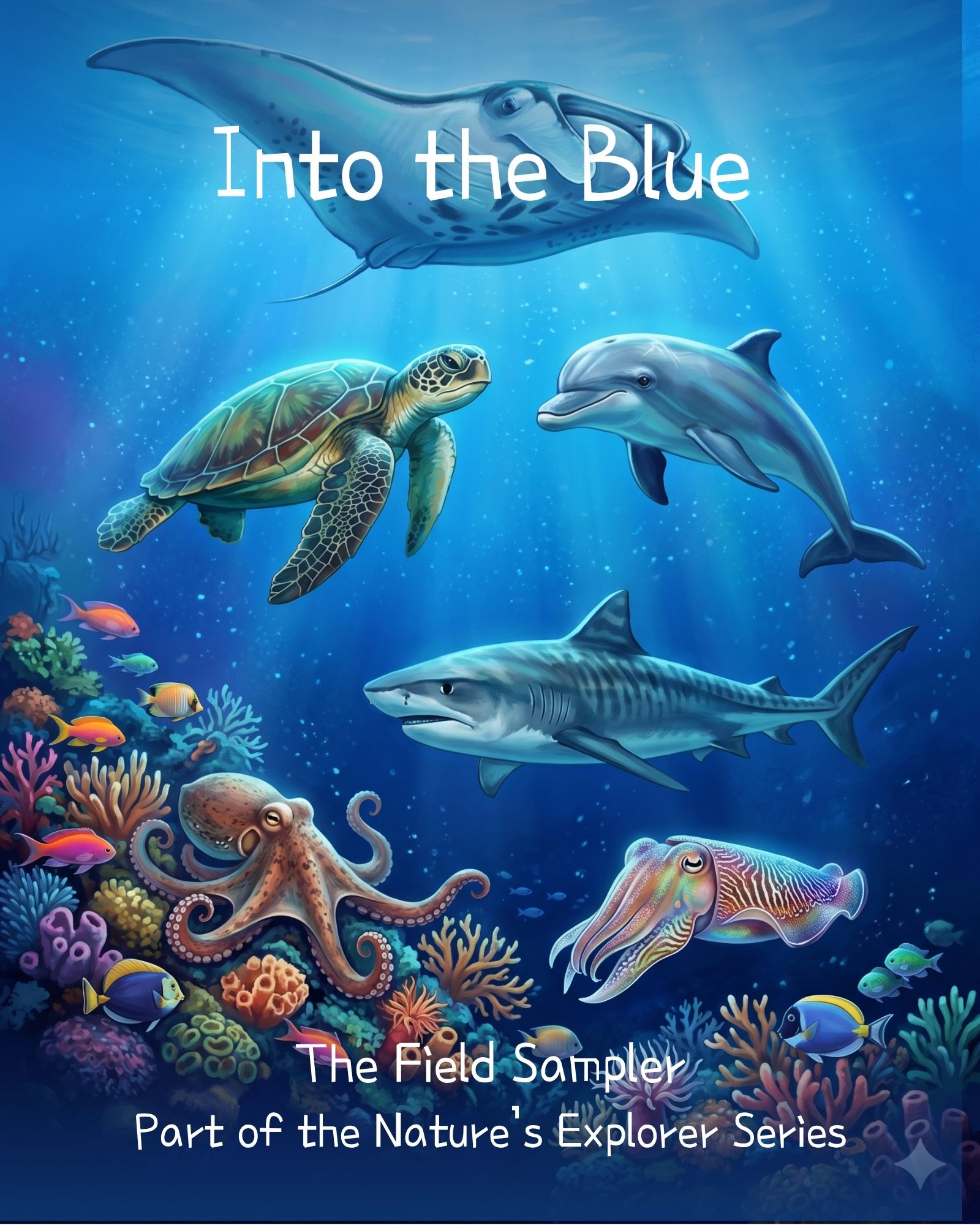
Into the Blue

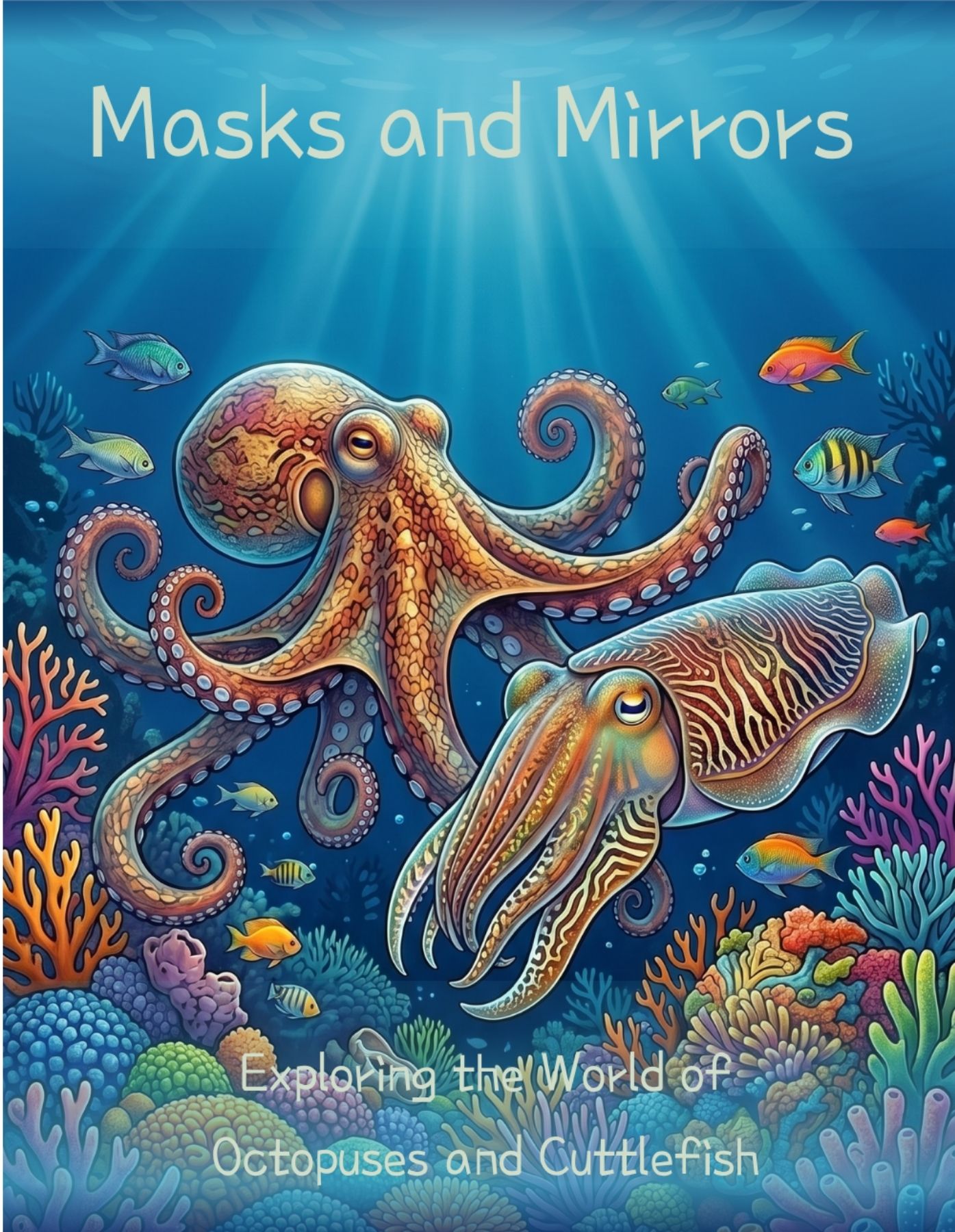
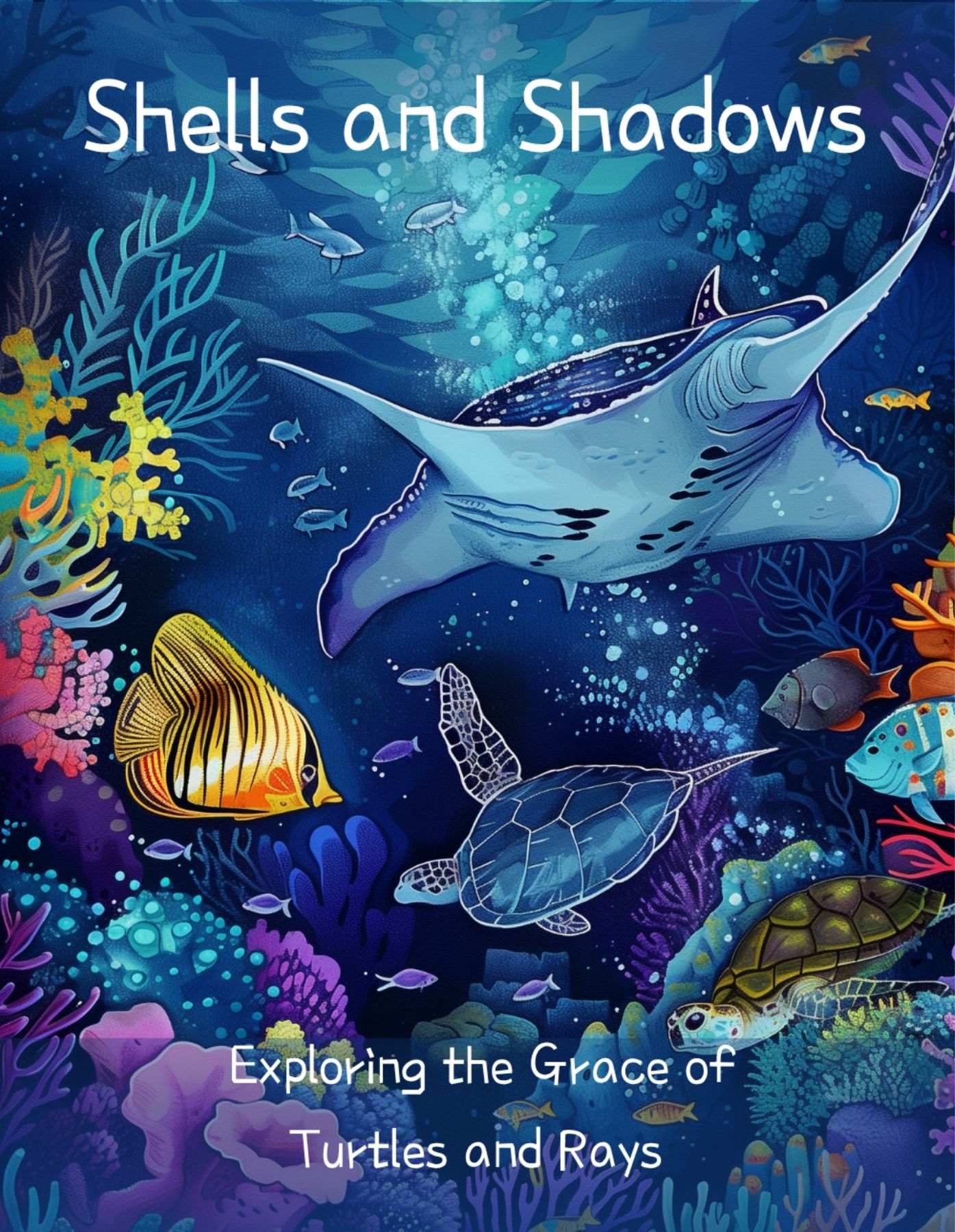
Collect the series.

Every title in the Into the Blue series stands alone. Any one is a good first book. But they're built to be collected.

Back to Into the Blue