A sea turtle's shell is part of its skeleton.
Fused to the spine and ribcage, covered in scute plates as unique as fingerprints. No two turtles look exactly alike — and it's not a backpack the turtle can climb out of.


They process it through a desalination system built into their own skulls.
Buy on Amazon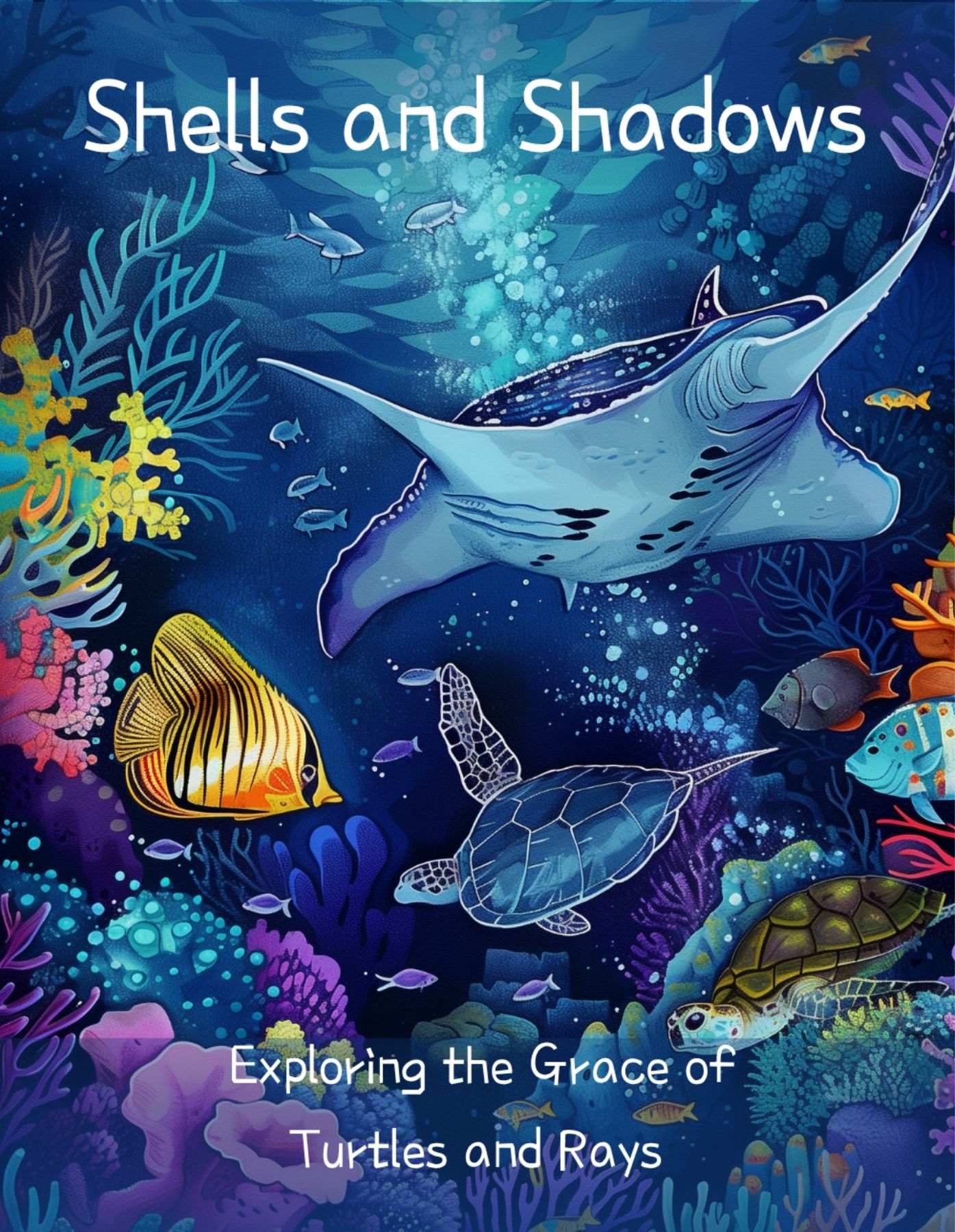
Sea turtles have been swimming these waters for over 100 million years — before the dinosaurs disappeared, before the continents settled into their current shapes. They didn't survive by being lucky. They survived by being very, very good at what they do. Rays glide through the deep like living kites, detecting the heartbeat of a creature buried under the sand through electroreceptors built for a world without light. Their entire skeleton is made of the same flexible cartilage that shapes your ears. Shells and Shadows is your field guide to both of them.
Fused to the spine and ribcage, covered in scute plates as unique as fingerprints. No two turtles look exactly alike — and it's not a backpack the turtle can climb out of.
Because every object in the ocean interacts with the surrounding electrical field differently, rays may also detect obstacles, navigate unfamiliar terrain, and read changes in their environment that would be completely invisible to any other sense. Scientists are still learning the full range of what this ability makes possible.
Temperature-dependent sex determination, magnetic navigation, the ability to hold their breath for hours — these are not accidents. They are the result of natural selection working across deep time on an animal that has outlasted nearly everything else on earth.
A ghost net is a fishing net lost or abandoned at sea that continues drifting through the ocean, catching and killing marine animals long after anyone stopped using it. Hundreds of thousands are currently drifting through the world's oceans — nearly invisible underwater, still catching whatever they touch.
The Lost Years — When sea turtle eggs hatch, the hatchlings dig out of the sand together, scramble to the water, and swim away alone. No parent is waiting. No parent is coming. A young sea turtle enters the ocean with nothing but instinct and spends its first several years drifting in open ocean currents, far from shore, largely invisible to researchers. Scientists call this period "the lost years." You are a young sea turtle at the start of that journey. Describe your first days in open water — what you sense, what you follow, what the ocean feels like when it is the only thing in every direction.
One of 8 writing prompts inside — each rooted in real science.
Shells and Shadows opens with sea turtle facts and manta ray facts presented as field-guide entries — how they navigate, how they hunt, how two completely different creatures have each solved the ocean for millions of years. Then come original stories: Timmy the green sea turtle doing what his species has always done, and Riley the manta ray moving through water most animals never reach. Eight writing prompts rooted in real science, word searches built from real science vocabulary, and coloring pages throughout. The science in this book connects directly to middle school life science topics — animal adaptations, ocean ecosystems, natural selection, and marine biology — making it a natural companion to classroom or homeschool study. There's something in here for every kind of reader — and no wrong way through any of it.
Buy on AmazonEvery title in the Into the Blue series stands alone. Any one is a good first book. But they're built to be collected.
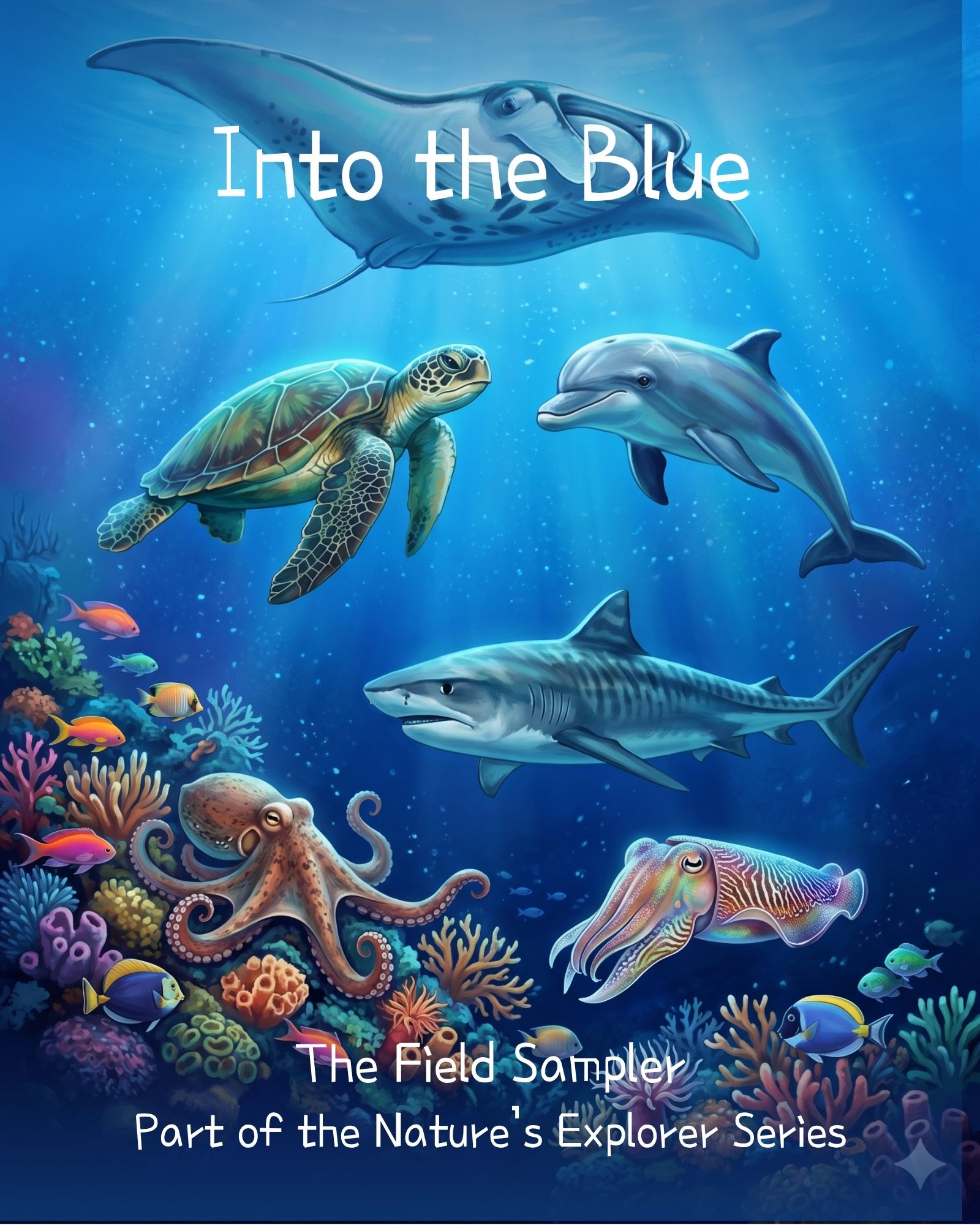
A Field Sampler

Exploring the Wonders of Sharks and Dolphins
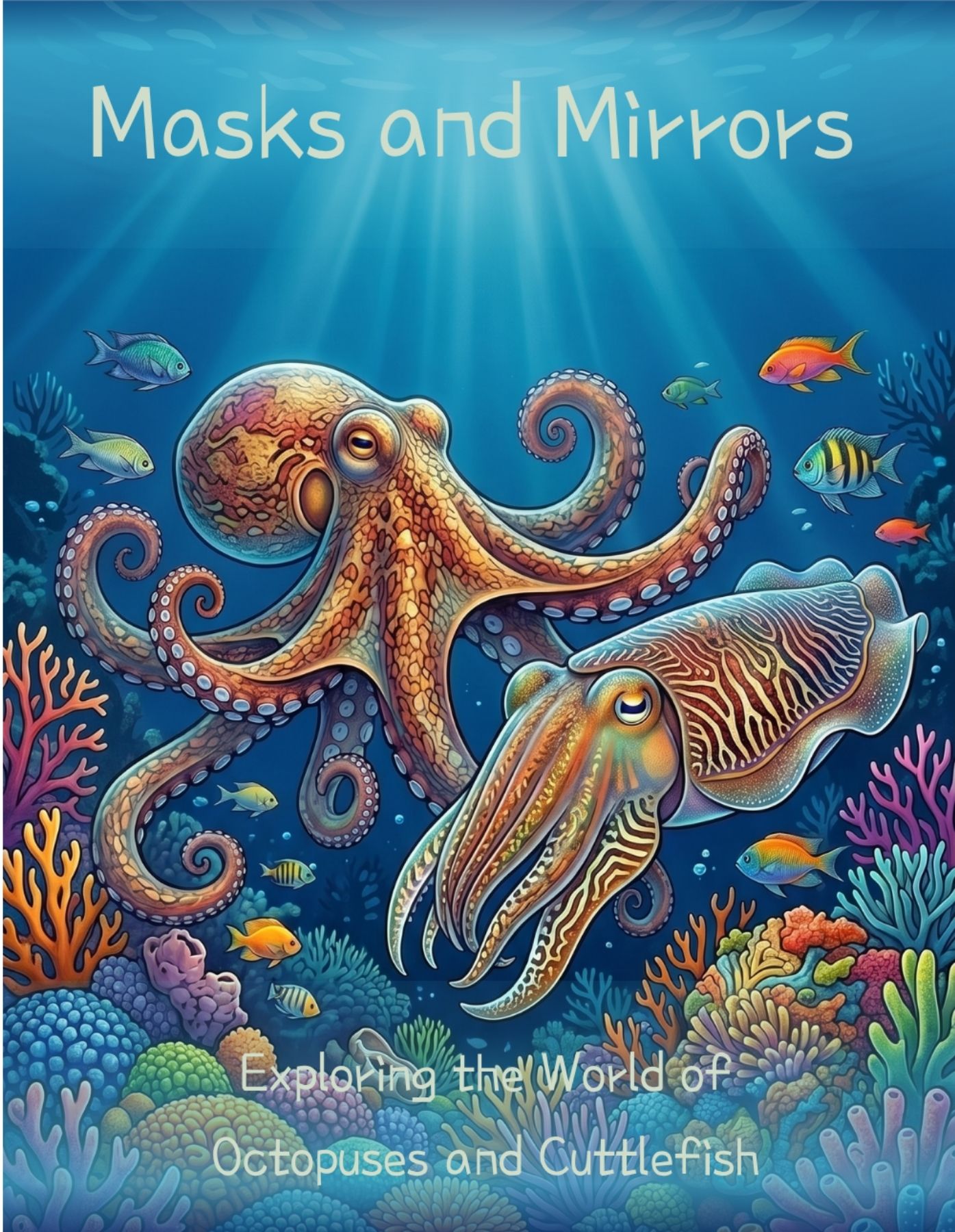
Exploring the World of Octopuses and Cuttlefish
Fill out the form below and we'll send you a copy. If you love it, a review means the world.